

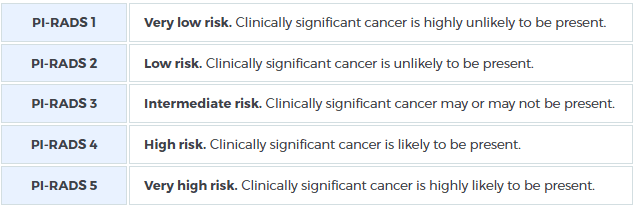
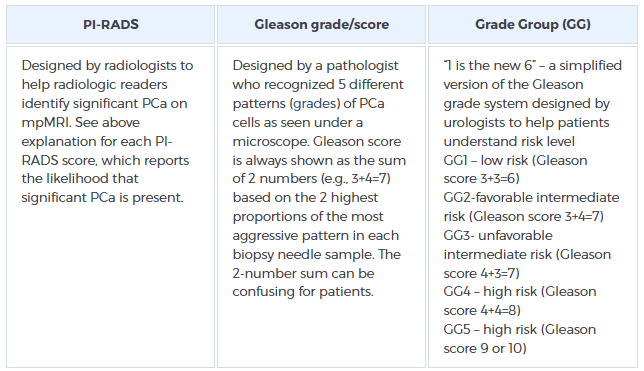
A panel of prostate imaging specialists developed the PI-RADS system to improve consistency and agreement among radiologists interpreting prostate MRI scans. The system provides standardized descriptions of which imaging sequences to use and how prostate cancer (PCa) presents in each sequence.
Since its initial release in 2011, the PI-RADS system has undergone two updates. Each new version incorporates advances in both biology and technology, further enhancing diagnostic accuracy. This has been particularly beneficial for experienced radiologists like Dr. Sperling, who specialize in prostate imaging, ensuring even greater precision in interpreting MRI scans.
Donec sagittis sagittis vestibulum. Morbi vestibulum neque sed diam tempus accumsan.
Sed porta quam sed magna cursus, sed sodales libero efficitur. Nam varius consectetur elementum. Duis iaculis laoreet elit id volutpat. Sed et porta arcu, ac pulvinar turpis. Maecenas nec elit semper, ornare ligula vita. Quisque quis nisi in ipsum luctus tincidunt.
If a PI-RADS score suggests a high likelihood of clinically significant prostate cancer, a needle biopsy is essential for an accurate diagnosis. This is because only a biopsy provides actual tissue samples that can be examined under a microscope. If prostate cancer is present, understanding its precise location, shape, size, and aggression level is key to determining the best course of treatment.
At the Sperling Prostate Center, we offer the most advanced biopsy technique available. Once a PI-RADS score indicates the need for a biopsy, our real-time, in-bore MRI-targeted biopsy stands out in several critical areas:
- Precise targeting: The suspicious area is visualized in real time, allowing for highly accurate targeting.
- Minimal needles: Only a small number of needles (usually 2-4) are used to sample the areas most likely to contain the most dangerous cells. This helps guide the planning of the most effective treatment.
- Increased accuracy: Real-time MRI guidance offers superior accuracy compared to fusion-guided biopsies, which rely on pre-captured MRI images and can suffer from alignment errors. Fusion biopsies often require additional systematic needle sampling to compensate for potential misalignment.
By using in-bore MRI-guided targeting, we eliminate the errors inherent in fusion biopsies, offering a more precise and effective diagnostic procedure.