
Staging & Grading
What is my prostate cancer stage?
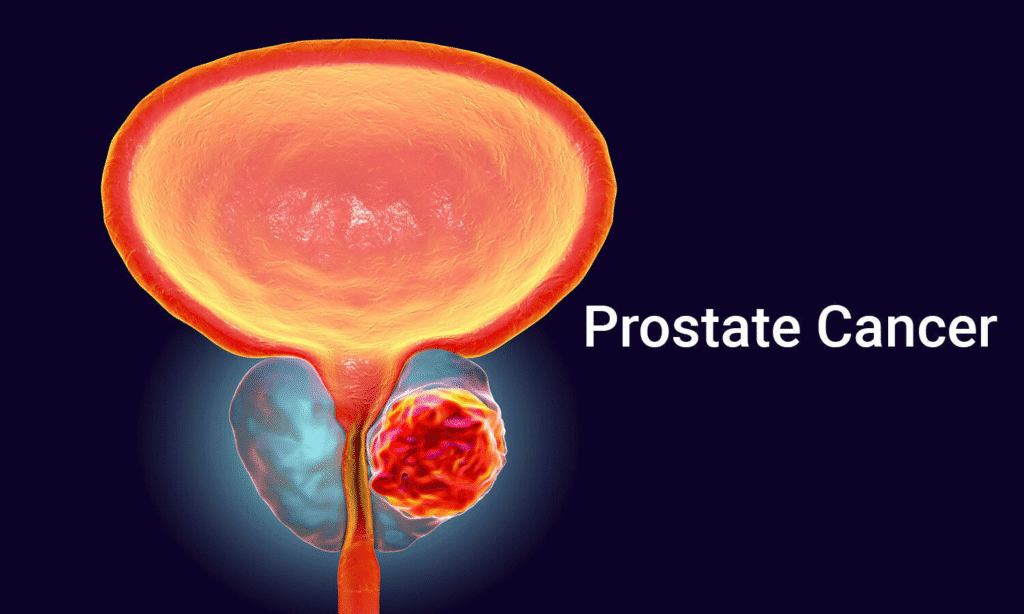
Staging is the process used to find out more about the location of the cancer and if it has spread within the prostate or to other parts of the body. Knowing the stage and grade of your prostate cancer is very important. It can help you accurately talk about your prostate cancer and discuss treatment options with your medical team. The process of staging involves a biopsy of the prostate cells, as well as imaging scans like ultrasound, MRI scans, and CT scans.
You may hear or see different terms for prostate cancer stages.
- Early-stage prostate cancer is still located within the prostate. Doctors also call it localized prostate cancer and may refer to it as stage I (1) or II (2).
- Regional prostate cancer has spread beyond the prostate to nearby areas such as seminal vesicles or lymph nodes. Doctors may also call it locally advanced prostate cancer. Some regional or locally advanced prostate cancers fall into stage III (3).
- Metastatic prostate cancer has spread (metastasized) beyond the prostate and pelvis to other parts of the body. Doctors also call it advanced prostate cancer or stage IV (4) cancer.
What Is My Prostate Cancer Grade?
Doctors determine the grade of your prostate cancer by examining the tumor cells under a microscope after a biopsy. The Gleason score describes the grade, helping estimate how aggressive the cancer might be and how quickly it could grow or spread.
A pathologist assigns a number to the cells based on their appearance, with the scale ranging from 1 (non-aggressive) to 5 (very aggressive). The two most common patterns are assigned numbers, which are then added together to form the Gleason score. This score is a key factor in predicting how the cancer will behave.
For example:
- If the most common cell pattern is 3 and the second most common is 4, the Gleason score will be 7.
- Similarly, if the most common cell pattern is 4 and the second most common is 3, it will still result in a Gleason score of 7.
However, it’s important to note that a 3+4 may behave differently from a 4+3, despite having the same total score.
Even if grade 5 cells aren’t the most common, many pathology reports will mention their presence. The presence of grade 5 cells, even in small amounts, increases the risk of cancer recurrence.
The Grade Group is a newer and simpler grading system that uses a scale from 1 to 5. You may see both the Gleason score and Grade Group listed on your pathology report.
Why Are the Stage and Grade of Prostate Cancer Important for Treatment?
Understanding the stage and grade of prostate cancer is critical in choosing the most appropriate treatment. Knowing the cancer’s location and the likelihood of it spreading or returning helps guide treatment decisions. Some treatments work best for early-stage prostate cancer, while others better treat advanced or metastatic prostate cancer.
Grading plays a key role, particularly in early-stage cancer. If the tumor is aggressive, more intensive treatment may be necessary. If the tumor appears less aggressive, doctors may recommend active surveillance to avoid unnecessary side effects.
Always discuss the stage and grade of your cancer with your doctor and healthcare team to make an informed decision about your treatment options.
What Are the Prostate Cancer Risk Categories?
The stage, grade, and other test results help determine your risk group, which will influence your treatment options.
One commonly used tool for risk assessment is the D’Amico system, which predicts the likelihood of cancer recurrence five years after treatment. It takes into account PSA levels, Gleason score, and clinical stage, placing patients into low, intermediate, or high risk categories. Higher risk categories indicate a greater chance of recurrence after treatment.
Here are the categories:
Low Risk:
- PSA less than 10 ng/mL
- Gleason score 6 or lower (Grade Group 1)
- Tumor confined to the prostate (clinical stage T1 to T2a)
Note: Some very slow-growing tumors are classified as “very low risk” if cancer is not detectable by DRE and fewer than three biopsy samples contain cancer.
Intermediate Risk:
- PSA between 10 and 20 ng/mL, or
- Gleason score of 7 (Grade Group 2 or 3), or
- Tumor still confined to the prostate (clinical stage T2b or T2c)
Note: The intermediate group is sometimes split into “favorable” (less than half of biopsy cores show cancer) and “unfavorable” (more than half of biopsy cores show cancer).
High Risk:
- Gleason score of 8-10 (Grade Group 4 or 5), or
- PSA greater than 20 ng/mL, or
- Tumor has spread beyond the prostate (clinical stage T3)
Note: We sometimes divide the intermediate group into “favorable” (cancer appears in less than half of the biopsy cores) and “unfavorable” (cancer appears in more than half of the biopsy cores).
More information on prostate cancer staging
The standard Tumor, Node, and Metastasis (TNM) system is used to stage prostate cancer. Learn more below about these clinical terms and what they mean for prostate cancer stages.
Tumor (T) Category Details
- Tumor (T) Category DetailsThe T category is based on the extent of the tumor itself.
T (Tumor) Categories:- T0: no tumor can be detected
- T1: the tumor can’t be felt with a DRE or seen with imaging
- T1a: the tumor takes up less than 5% of the removed tissue
- T1b: the tumor takes up more than 5% of the removed tissue
- T1c: the tumor is diagnosed with a needle biopsy, usually because of an elevated PSA
- T2: the tumor is confined to the prostate and can be either felt with a DRE or seen with imaging
- T2a: the tumor is confined to half of one lobe (side) of the prostate
- T2b: the tumor is present in more than half of one lobe but is not in both lobes
- T2c: the tumor is present in both lobes of the prostate
- T3: the tumor has grown outside of the prostate and may be present in the seminal vesicles
- T3a: the tumor is outside of the prostate but isn’t in the seminal vesicles
- T3b: the tumor is outside of the prostate and has spread to the seminal vesicles
- T4: the tumor has grown outside of the prostate into tissues beyond the seminal vesicles such as the bladder, rectum, pelvic wall, or pelvic muscles
Node (N) Category Details
The N category is based on whether the cancer has spread to nearby lymph nodes.
N (Node) Categories:
- N0: the cancer isn’t present in nearby lymph nodes
- N1: the cancer has spread to one or more nearby lymph nodes
Metastasis (M) Category Details
The M category is based on whether the cancer has spread to other parts of the body.
M (Metastasis) Categories:
- M0: the cancer hasn’t spread to distant parts of the body
- M1: the cancer has spread to distant parts of the body
- M1a: the cancer has spread to distant lymph nodes
- M1b: the cancer has spread to the bones
- M1c: the cancer has spread to other organs, with or without spread to the bones